Est. 1899
The Story of Kornweiss Photography
How a sixteen-year-old immigrant from Russia built a photography dynasty on the Lower East Side — and how, more than a century later, his photographs are reconnecting the families he served.
From Russia to Rivington Street
Joseph Kornweiss was born in Russia in 1877. In 1893, at the age of sixteen, he arrived at Ellis Island — one of the roughly two million Eastern European Jews who would pass through New York's immigration processing between 1880 and 1924.
He settled on the Lower East Side of Manhattan, which by the 1890s was the most densely populated neighborhood in the world. More than 700 people lived on every acre. The streets teemed with pushcart vendors, sweatshop workers, and the sounds of a dozen languages — but predominantly Yiddish.
Within six years of arriving in America, Joseph had established his own photography business. His first known studio was at 155 Rivington Street, in the heart of the immigrant quarter. He produced silver gelatin prints — primarily portraits — creating lasting images that immigrant families treasured as luxury items.
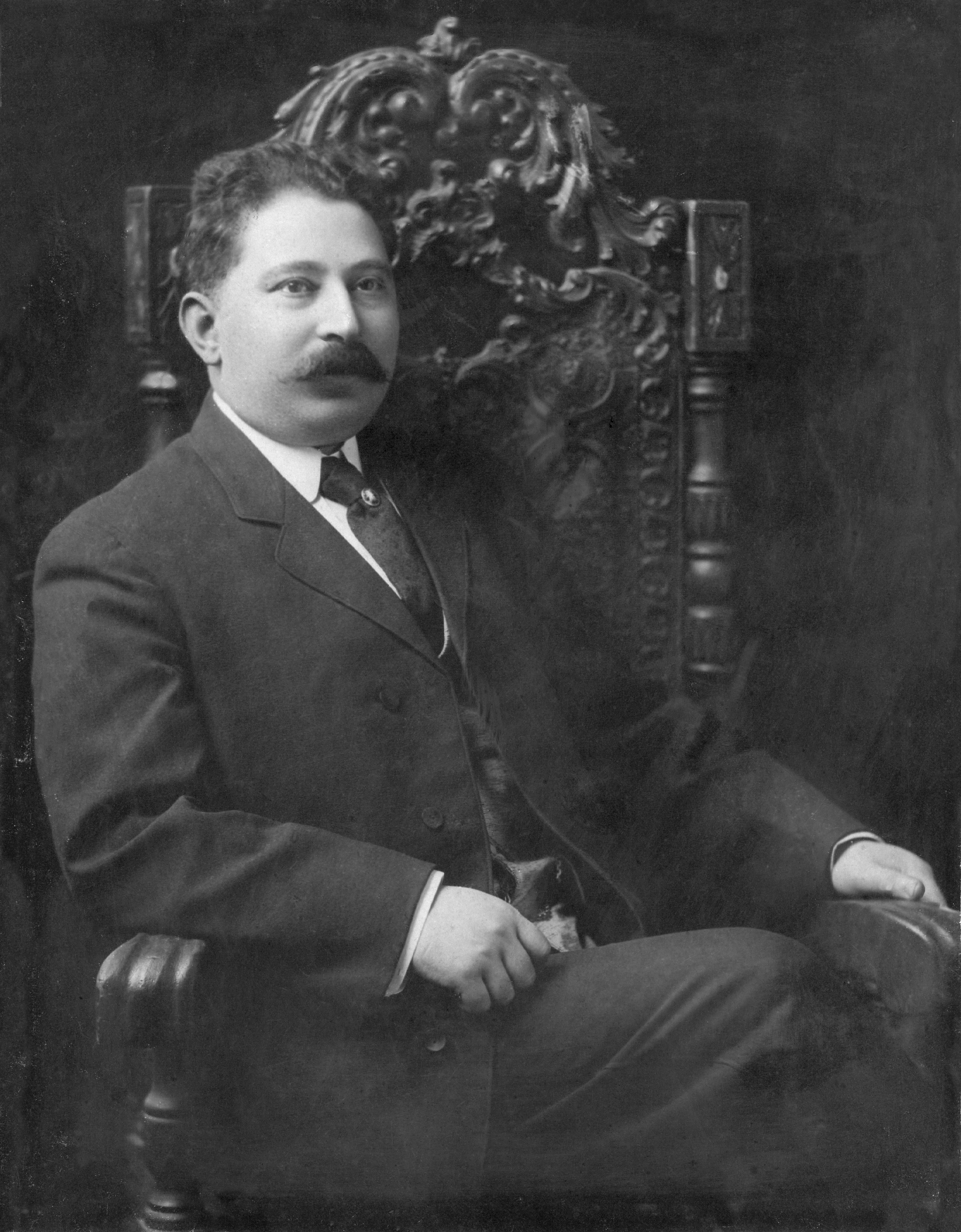
Joseph Kornweiss, circa 1905
Kornweiss Bro's
Joseph was joined by his brother Abraham, and together they operated as “Kornweiss Bro's” — a name stamped on the backing cards of their photographs and visible on recovered prints to this day. The brothers expanded to at least three locations across New York City:
- —155 Rivington Street on the Lower East Side
- —26 Canal Street at the boundary of the Jewish quarter and Chinatown
- —1609 Pitkin Avenue in Brownsville, Brooklyn
The Kornweiss studios served the immigrant communities of lower Manhattan and Brooklyn for decades. Their subjects were the people building new lives in America — newlyweds, proud parents, families marking milestones. In an era before casual photography, a studio portrait was an event and an investment.
Loss, Survival, and Revival
The Great Depression swept away the family's wealth, but the artistic legacy endured. Alexander Kornweiss, Joseph's son, continued the tradition through the mid-1900s. The family's story mirrors that of countless immigrant families — arrival, struggle, achievement, and the slow dispersal of a community across the boroughs and suburbs.
Around 2000, Peter Kornweiss revived the family business, bringing a new artistic vision — moving from studio portraiture to digital fine art photography. But it was the discovery of the historic archive — boxes of original prints, studio stamps, and documents — that revealed the full scope of what the family had created.
A Living Archive
This archive exists to preserve these photographs and to reconnect them with the families and communities they belong to. Kornweiss prints are still surfacing — in attics, estate sales, and antique markets around the world. Many families have a Kornweiss portrait among their heirlooms without knowing the studio's full history.
But an archive of photographs without stories is just a collection of images. The real value is in the connections — when someone recognizes a face, shares a memory, or discovers that a stranger's photograph holds a piece of their own family history.
That's why this is a community archive. You can browse, identify people, share stories, and contribute your own family's photographs. Every connection helps piece together the remarkable history of the families who sat before a Kornweiss camera.
Do You Have a Kornweiss Print?
If you have a photograph with a Kornweiss studio stamp, we want to hear from you. Your print may hold the key to connecting families across generations.